 English
 Indian
 العربية
 Español
 Deutsch
 Türkçe
 Русский
 Français (Afrique)

The PC Gamer Mysteries, Case #1: "A Slice of Death": Why is there a dead golfer hidden in Golden Tee '99?
"Golden Tee '99, hole seven, Aspen Lake: There's a dead body about 180 yards out, a little bit to the right in the woods there," says Keith of Keith's Arcade, a YouTube channel not typically devoted to cold case homicides. But as they say in golf, you've got to play it as it lies, and in November 2012 Keith stumbled upon a body lying motionless just off the green of the otherwise picturesque, forested course in northern Colorado. It was his responsibility to tell the world what he'd found.
"There you go. There you go," Keith repeats, clearly in shock. "Dead body in the woods, about 180 yards from the tee off point. Hole seven, Aspen Lake, Golden Tee '99. Thanks for watching." truewildgame.com
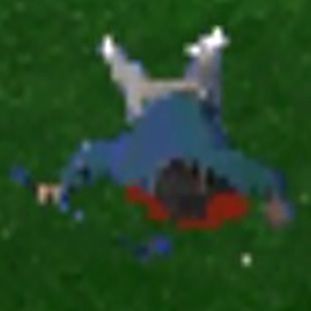
Under the pixelated body is a pool of blood, suggesting this unidentified man lying facedown in the grass met a violent end. A golf club stretches out from his hand—but was he really a golfer? Or was it placed there to make it look like a tragic accident, an injury sustained during what is well-known to be a dangerous game? Were there clouds suddenly darkening over the course beside Aspen Lake, or were those just scanlines?
Golfers, famously, take their lives into their own hands every time they get in one of those little carts (no seatbelts!!) and drive it, like, 200 yards. Perhaps that's why this death went uninvestigated for so long—it's even conspicuously absent from the Colorado Bureau of Investigation's cold case files, at least according to my comprehensive independent examination (typing the word "golf" into the database, getting zero results and immediately giving up).
To solve a case this cold, I knew there was only one place to go: straight to the source.
Bogey in the rough
Just one problem. Like any other professional true crime investigator (better known as a "podcaster"), I stumbled upon this case with little clue of who to get in touch with first and a keen awareness of the fact that even if I did, jumping right to the solution would ruin all the suspense. So I started by getting the email of a friend-of-a-friend, whose earliest credit on Mobygames happened to be Golden Tee '99.
"I vaguely remember that this was a thing, but unfortunately I don't know how it got in," artist Stephen Alexander—who went on to work on BioShock and BioShock Infinite—told me last year. "If I had to guess it would have been put there by Jim Zielinski (the course designer). He did pretty much all art placements in that version of the game since it was almost all gameplay relevant. Outside of that I really don't know. I was credited on '99, but I think I just did the logo animation (if even that)? I had started pretty recently and was working on some other 3D stuff that was being started up at the time."
A promising lead! Armed with a suspect, I did what any aspiring podcaster would do in this situation: Sit on the information for a month, then track down what might be Jim Zielinski's email, fire off a single message at 5:52 pm, and completely dropping the story as soon as no response was forthcoming.
The third caddie

Everyone in the professional investigating-fake-dead-bodies-in-30-year-old-golf-games sphere has something that drives them. A tragedy in their past. An unwavering, ironclad sense of justice. A Turfman 800.
For me, it's procrastination. Faced with some other task I really didn't want to do in March 2026, I reopened the case and found another lead. Software engineer Tino Kalafatis has little online presence, but with a bit of searching I uncovered that he has, like Zielinski, worked at Golden Tee creator Incredible Technologies since the 1980s. This time my email found its target.
An ace gumshoe himself, Tino did what had previously proven slightly difficult for this reporter: he asked Jim.
…who, I should be very clear, did not in fact murder a man on a Colorado golf course. But he did cheekily place a little pixelated body on hole seven of Aspen Lake in Golden Tee '99, as a goof.
"Yes this is legit. Back in the day we thought it would be fun to put some interesting things to look at off in the woods in case players made an errant shot. The dead guy was my idea, and it's actually a digitized photo of me laying in the grass outside our office. We digitized the photo and put it into the game," said the man himself, as relayed over email by Kalafatis.
Turns out this was never a fake murder investigation at all. It was a fake suicide investigation all along.
As he's described on the Incredible Technologies golf-focused blog LiveWire, Zielinski is "a guy who loves golf, who strives to create golf games for other people who love golf, and he’s damn good at it." Before co-creating Golden Tee, he was the arcade company's "first and only QA employee," before bonding with programmer Larry Hogdson over "their shared love of the gentlemen's game" and taking on course design for a fledgling golf simulator. That project didn't pan out, but it eventually led to the creation of Golden Tee. They've been making golf games ever since.
You may still be reeling from the twist that Golden Tee's course mastermind once put a photograph of his own "dead" body in the woods of hole seven of Aspen Lake in Golden Tee '99. But it turns out this wasn't an isolated incident. Bodies have also been spotted in Golden Tee 2010 and whichever one this is. The sport remains dangerous, no matter how much more sophisticated golf game technology grows with each passing year.
Cover-up!?!?
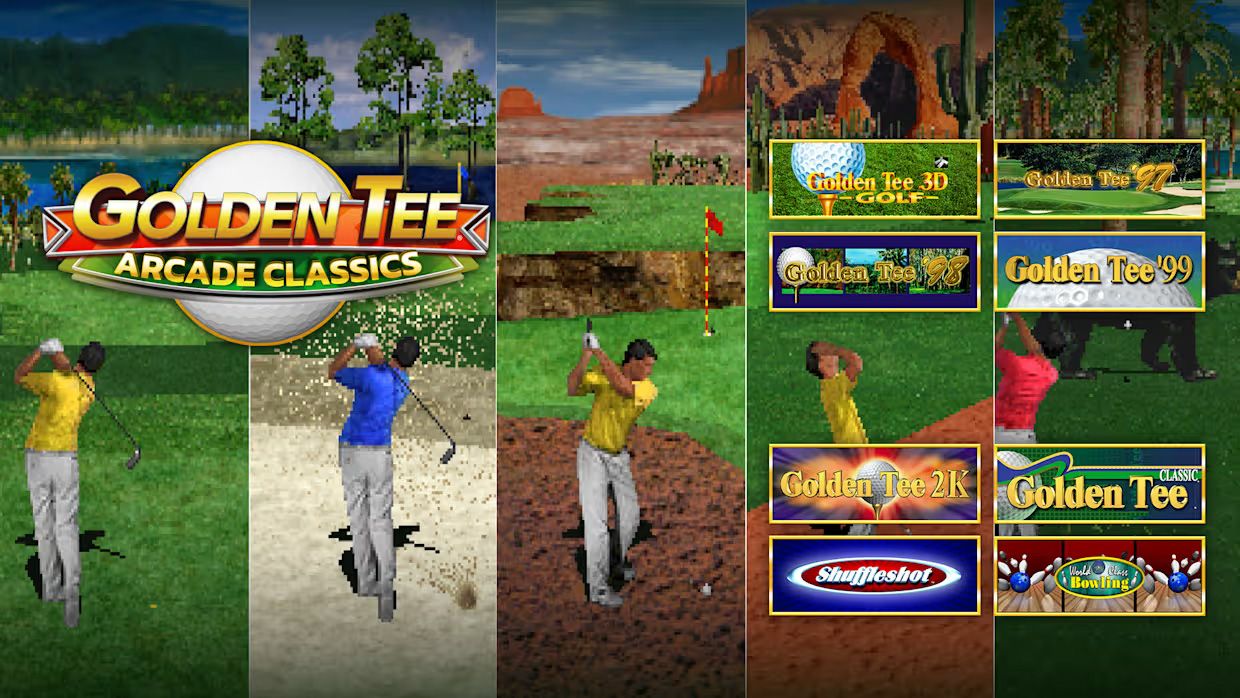
Last year, after stumbling across Keith of Keith's Arcade's video about the dead body in the woods, about 180 yards from the tee off point on hole seven of Aspen Lake in Golden Tee '99, I went looking for it myself in the recently released Golden Tee Arcade Classics collection on Steam.
There I made a chilling discovery: The body, which we now know was the digitized flesh of Jim Zielinski, placed by the physical flesh of Jim Zielinski, was right where it should be… but the blood wasn't.
Was this a flaw in the emulation used to present these arcade games on PC? Or an attempt to make golf look less cutthroat? Who took the blood, and what did they do with it?
These hard-hitting questions, put to compilation developer Digital Eclipse, have so far gone unanswered. Complicating the situation, if you play Golden Tee '99 on the Internet Archive—where it runs in arcade emulator MAME—the pool of blood is there. So what's different about the Arcade Classics version? Even Zielinski isn't sure, though he offered his own theory.
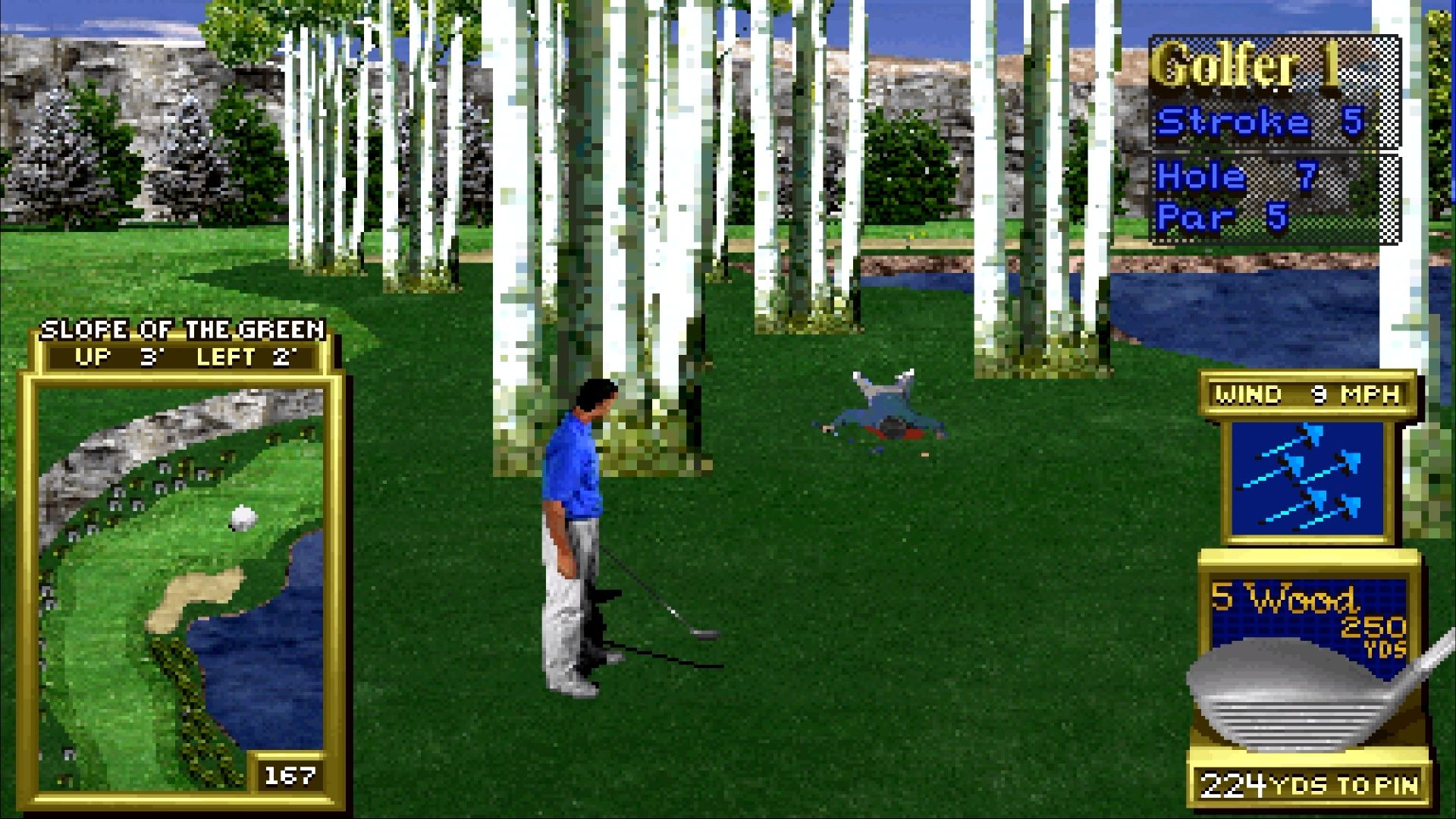
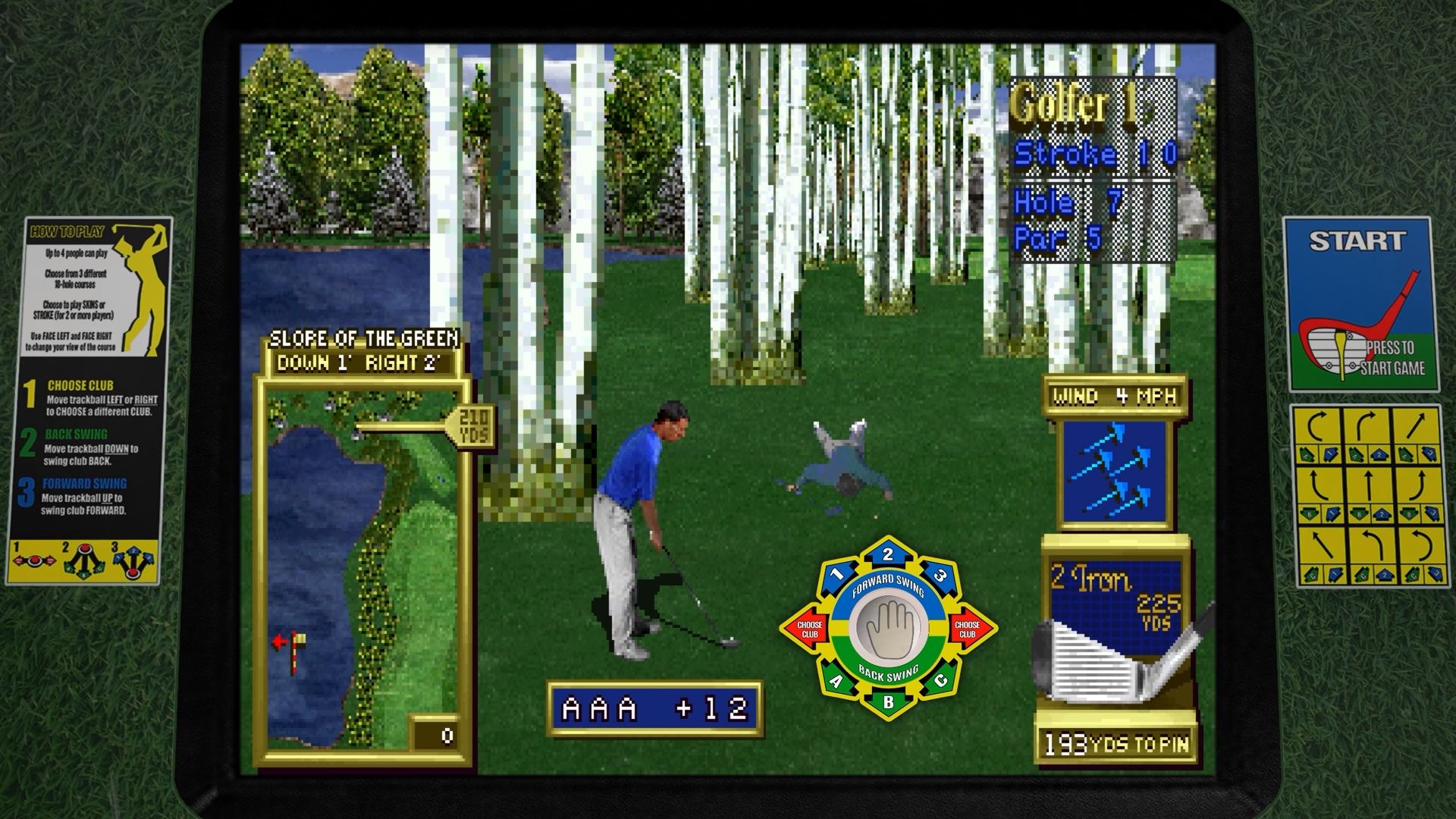
"There may have been two versions, the original one with blood, and then one where we got rid of the blood puddle," he said. "For a lot of the early Golden Tee 3D golf courses, I also placed a digitized version of myself directly behind the first tee, so my friends and family could easily find me in the game. They just had to start a game, turn around 180 degrees, and I'd be standing there."
I asked if the original photo used to add Jim to the game was still around somewhere, but he said it's sadly been lost to time. By cross-referencing the Arcade Database, however, I was able to determine that Incredible Technologies did release two revisions of Golden Tee '99: v1.00 and v1.00S. S for… hole seven? S for sanitized? S for sans blood?
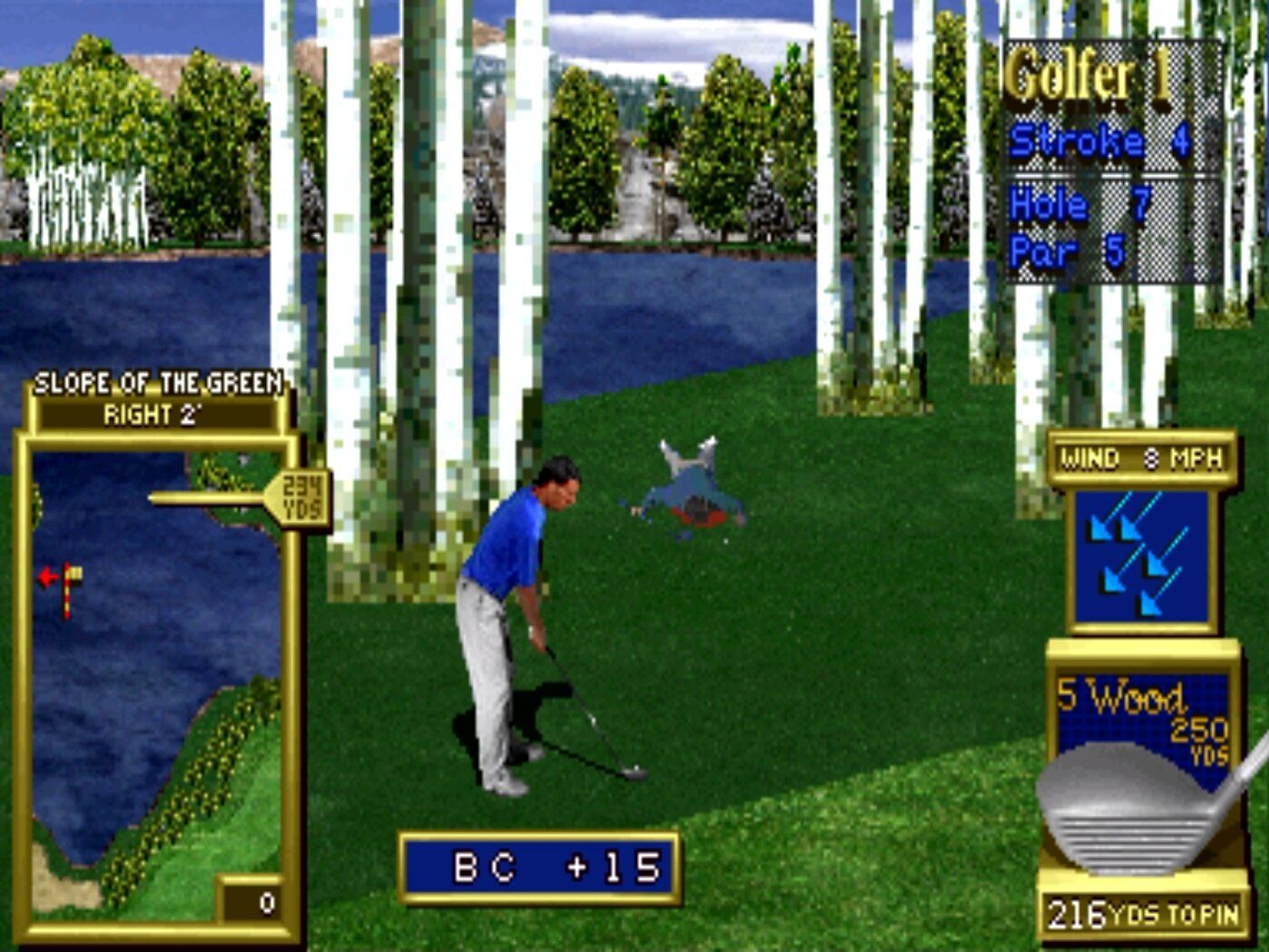
Bound by my duty, I found a ROM of Golden Tee '99 v1.00S online and loaded it into MAME. I started noticing more stuff on each course that I swear wasn't there before. There were more spectators, more not-so-hidden bits of eye candy that oozed Zielinskism. A woman in a polka dot bathing suit sunbathing behind a log cabin. A guy on a lawnmower. A cheery group in a bright yellow raft paddling alongside the fairway. I hadn't seen these versions of the Aspen Lake front nine before. And when I got to hole seven, about 180 yards out, a little bit to the right in the woods, there was Jim, sure enough. And there was Jim's blood.
Toss that theory into the sand trap, then.
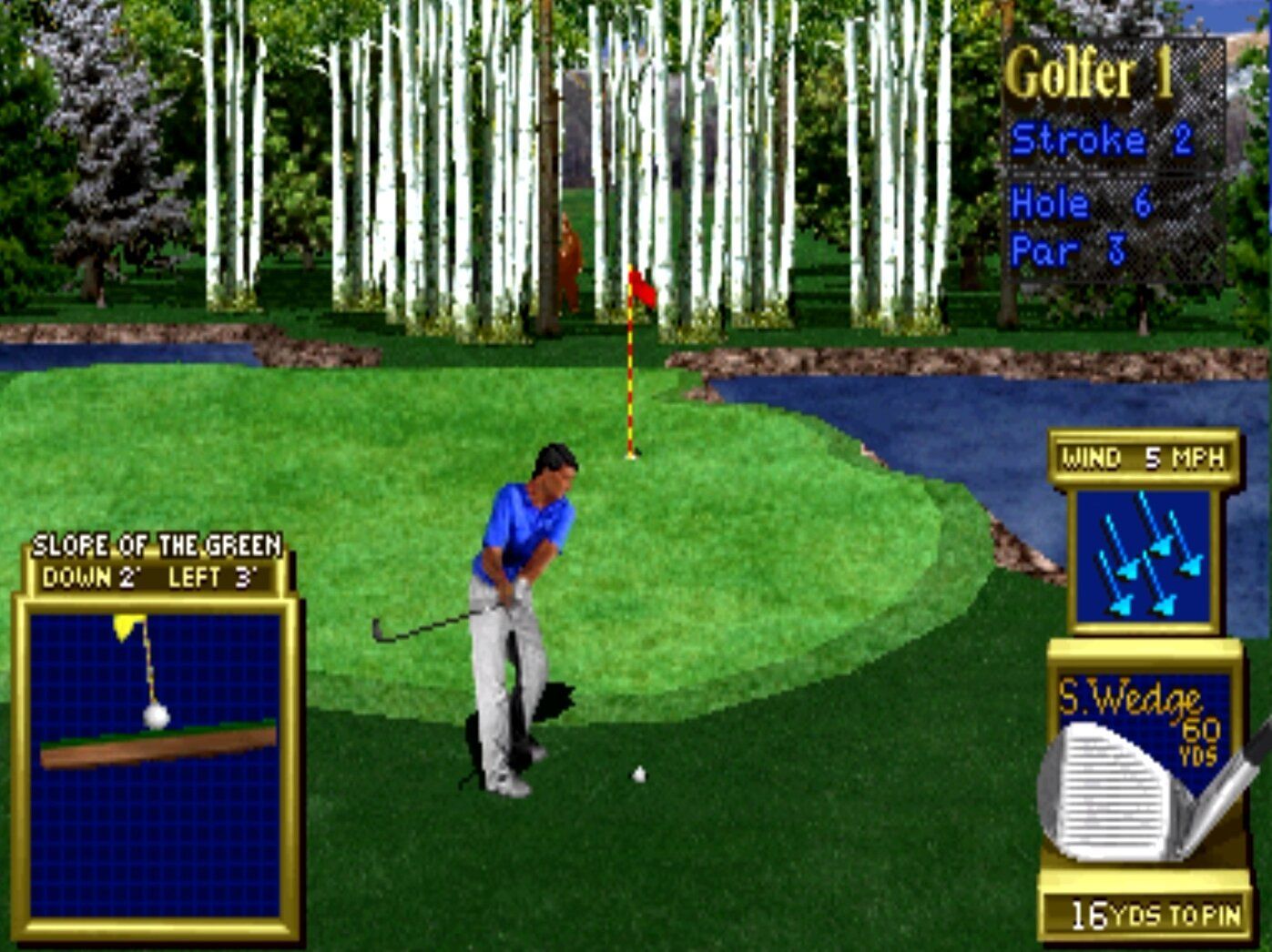
Perhaps that S actually stood for something a little more sinister—something Digital Eclipse was simply trying to distract me from with that missing blood. Keep me focused on the body, not on what else was going on around the course. But it didn't work, because on my way to hole seven I found something to blow this whole case wide open. Something lurking in the woods, just behind the green. Something that suspiciously disappeared when I tried to get too close.
S… FOR SASQUATCH!?!?
I've taken this investigation as far as it can go. Time to bring in the experts.
Analytiker: It-chefer behöver bli klokare kring ROI för AI
De flesta organisationer har i stort sett inte kunnat mäta den ekonomiska avkastningen från AI, men enligt analytiker håller nya metoder för att beräkna avkastningen på investeringar på att växa fram.
– Det finns en fördröjning mellan utvecklingen av tekniken – och till och med investeringen i tekniken – och det värde som en organisation kan dra nytta av den, säger Michael Chui, senior fellow på McKinsey.
Men allt fler företagsledare ställer frågor.
– Ekonomicheferna frågar it-cheferna, och investerarna frågar vd:arna: var är avkastningen på investeringen från det här?, säger han.
I McKinseys undersökning”State of AI”, som publicerades i augusti, uppgav cirka 80 procent av de tillfrågade att AI hade förbättrat deras produktivitet. Men endast 37 procent uppgav att AI:s påverkan syntes i vinsten, vilket är ungefär samma siffra som förra året. En ännu mindre andel – endast 6 procent – uppgav att AI levererade betydande värde och stod för minst 5 procent av deras rörelseresultat.
Med andra ord finns det en skillnad mellan det värde som enskilda medarbetare får ut av AI och det värde som organisationerna får ut av AI, säger Chui.
De största vinsterna kommer att uppnås genom att omforma arbetsflöden och processer där människor och AI-agenter arbetar tillsammans, enligt McKinseys Technology Trends Outlook. Det räcker inte att bara lägga till agenter i befintliga processer.
– Vanligtvis involverar ett arbetsflöde från början till slut flera personer, och att helt omforma det med hjälp av AI är kännetecknande för högpresterande företag, säger Chui.
Kostnadskontroll
Att hantera tokenkostnader och tillämpa rätt modell för en uppgift är en del av att uppnå bättre avkastning, säger Chui.
– I många fall saknas helt enkelt transparens. Vilka arbetsbelastningar driver egentligen dina kostnader?
Tre av fem it-chefer är oroliga för att AI-agenter ska orsaka oväntade kostnader, och detta sker redan, säger Gareth Herschel, analytiker på Gartner, under ett inledningsanförande vid Gartners Data & Analytics Summit i Mumbai.
– Vissa organisationer har redan upptäckt att kostnaden för tokens för kodningshjälp är mycket högre än kostnaden för mänskliga mjukvaruutvecklare, säger Herschel.
Ju fler agenter som arbetar tillsammans, desto större blir din ekonomiska risk.
– Det är som att ge din tonåring ditt kreditkort. Jag är säker på att du kommer att lära dig mycket, men främst av räkningen, säger Robert Thanaraj, analytiker på Gartner samt medtalare vid huvudtalet i Mumbai.
Företag bör följa upp kostnaderna vid prototyputveckling, till exempel genom att räkna ut kostnaden per enskild agent per slutförd uppgift, säger Thanaraj.
– Det hjälper dig att utvärdera olika stora språkmodeller eller att välja ett mer prisvärt alternativ, såsom mindre språkmodeller eller modeller med öppna vikter.
Ett bredare perspektiv på avkastningen
Analytikerna lyfter fram många utmaningar när det gäller att beräkna avkastningen på AI-investeringar, till exempel oväntade kostnader, dålig datakvalitet, bristande skalbarhet och långsam acceptans bland användarna.
Men företagsledare blir allt bättre på att följa upp vad de lägger på AI och avkastningen, säger Chui från McKinsey.
– Mellan cfo:n och cio:n börjar vi se dessa discipliner växa fram.
År 2025 var sannolikheten att ett AI-initiativ skulle uppnå avkastning på investeringen en på fem, enligt Gartner-analytikerna.
– Avkastningen är viktig, men för att uppnå den måste vi inte bara se den som ett finansiellt mått, eftersom värde inte alltid handlar om pengar, säger Thanaraj.
Företag bör koppla AI-projekt till både finansiella och icke-finansiella resultat, vilket är en del av vad Gartner kallar ”avkastning på intelligens”.
– Vi måste flytta tyngdpunkten från kostnad till värde, sa Herschel.
– Resultaten kan vara finansiella, till exempel intäkter, men de kan också vara icke-finansiella, till exempel medborgarupplevelsen.
Rätt grund: sammanhang, infrastruktur, styrning
Gartners analytiker menar att det krävs en stark teknisk och kontextuell grund för att uppnå avkastning på AI-investeringar.
– Styrning skapar förtroende. Sammanhang ger mening. Utan en stark grund kan AI mycket väl stå för förstärkt okunnighet, säger Thanaraj.
Datakvaliteten kan till exempel utgöra ett hinder.
– Utan ett tydligt sammanhang gör stora språkmodeller bara gissningar, säger Thanaraj, och det förstärker missförstånd. Dålig data och dålig AI-design innebär fler ”hallucinationer” och dåliga resultat.
– Man kan inte köpa det här kontextlagret färdigt. Det måste byggas upp för att passa just dina behov, säger Herschel.
En stark teknisk grund, till exempel en robust nätverksinfrastruktur för dataöverföring, är avgörande, säger Jack Gold, chefsanalytiker på J. Gold Associates.
”Interaktioner mellan agenter kommer att bli vanliga och affärskritiska, även när antalet agenter och deras fördelning växer dramatiskt och omfattar interaktioner mellan avlägsna agentplatser och enheter”, skriver Gold i en forskningsrapport.
En majoritet av organisationerna etablerar så kallade ”harnesses” – det mjukvarulager som styr och samordnar modeller, verktyg och arbetsflöden – för att reglera användningen av AI i verksamheten. Enligt en global KPMG-undersökning som publicerades förra månaden har 55 procent av organisationerna ett formellt AI-harness-lager. Den siffran stiger till 86 procent bland organisationer som rapporterar en fastställd avkastning på investeringen.
Organisationer som ”kombinerar tydligt ansvar, samordnad styrning, motståndskraft och tillförlitlig värdemätning kommer sannolikt att ha de bästa förutsättningarna att omvandla en bred införande till hållbar prestanda”, säger KPMG.
'Please give Novus one more chance': An 11-year-old early access survival game just got its first update since 2018
What happened?
- Early access survival game Novus Inceptio got a major update this week
- It's the game's first update since 2018
- The game entered early access in October 2015 (and is still in early access)
- The solo dev says "the energy and the will to finish the project are back"
- The map has gone from 9 km² to 64 km² of "pure wilderness"
- Combat has been rebuilt
- It's now singleplayer but there are plans for co-op
Responses have been edited for length and clarity.
PC Gamer: Why did development stop for so long?
Martin Markus Mastný: I jumped into Unity head first, learned C# and learned how to work with Unity. That went on from 2013 until the early access release on October 5, 2015: learning, making the game, trying things. The whole time I had this strong idea and excitement that one day it would be an MMORPG. I built the server layer and databases and connected it all to Unity.
Then Steam slapped me in the face :) Suddenly I had to deal with a million other things: PR, sales, the community, bugs, people's reactions.
When I opened the Steam forum in the morning and questions were still unanswered, I had to answer them myself right away. So my community manager ended up handling bugs and being my quiet advisor. I needed to react immediately so people got a response. I felt I had to accommodate everyone and thank them for playing the game.
The result was total collapse and burnout. It basically ruined the whole game, too.
Martin Markus Mastný
My day looked like this: get up, deal with the community, work on the game all day and deal with the community while doing it. No time off at all. I went full time like that from early 2016 until 2019, nonstop. And I kept making compromises to please people, to get good reviews, to give everyone what they asked for. The result was total collapse and burnout. It basically ruined the whole game, too. It turned into something it was never supposed to be. Now, years later, I can see it in the code and in the mechanics, and I'm trying to bring it all back and fix it.
Why return to Novus Inceptio now?
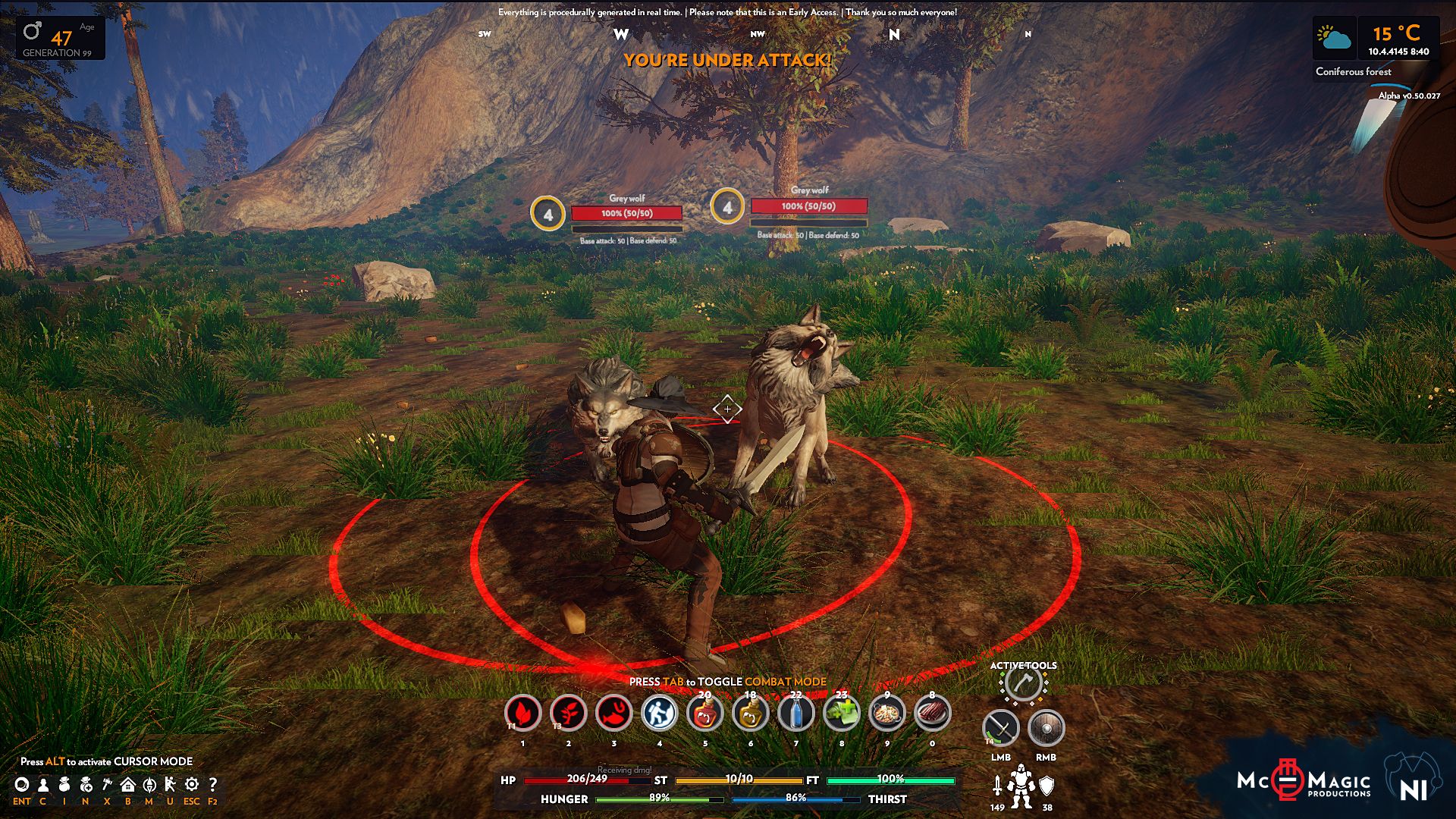
It's about fulfilling a dream. I had that dream and that vision, and I know I can't fulfill it 100%, that's not realistic. But whenever I launched the game, the world and the environment gave me a really nice feeling. I could spend an hour just running through the forest, enjoying the landscape and listening to music. That's why I went back to it.
It's a kind of responsibility to all those people, to close this chapter fairly and well. This game is a big chapter of my life, and it changed my life for better and for worse. I have that commitment and I want to keep it: finish the game to a state where I'm happy with it.
Some inner tension and emotion when I talk about the game, I don't even know exactly what it is. It's like my child. When someone curses at it, it's hard for me, because I put it together as well as I could.
What's your message to skeptical players?
I can't promise anything and I don't want to.
Martin Markus Mastný
That's a hard one. The way I see it now, the roughly seven-year break didn't happen. I had to erase it in my head and tell myself I'm back in 2019 and moving on, just with new experience from other projects.
I can't promise anything and I don't want to. The only thing I can say is: be patient and watch whether I keep going the way I'd like to. Early access gives me the chance to still change things while it's possible and to react to the community, which is what I've been doing the whole time anyway. So watch it if you want, and you'll see whether you give me that trust back or not.
Any advice for solo devs making survival games?
Make what you enjoy. Study other games and learn from their successes and their mistakes. But I wouldn't want to be in your shoes right now. It was hard in 2015 and today it's much harder. Look for new challenges, there's still a lot you can do in survival games.
I avoided classic co-op, and commercially it hurt the game a lot that it wasn't multiplayer. Sometimes you have to step back from your own vision when it's the thing dragging the game down. You can't see that at the time, only with distance, or when someone tells you from their own experience. I have that experience now, back then I didn't. Maybe that's the main advice.
2026 games: All the upcoming games
Best PC games: Our all-time favorites
Free PC games: Freebie fest
Best FPS games: Finest gunplay
Best RPGs: Grand adventures
Best co-op games: Better together
D&D and Magic The Gathering developers unionize, demand protection from "LLMs and generative AI"
The makers of Dungeons & Dragons and Magic: The Gathering have unionized. Today, the developers of the massive tabletop games have announced that they're joining United Wizards of the Coast - CWA, and are calling on their company to voluntarily recognize the union. Among their demands is protection from what they call an increasing push for AI use from Wizards of the Coast management.
United Wizards of the Coast announced its existence in April. Back then, it consisted only of the developers behind the digital card game, Magic: The Gathering Arena. Today, the workers behind Dungeons & Dragons, D&D Beyond, Magic: The Gathering, and Duel Masters announced their intent to unionize under the same banner. This union is supported by the Communication Workers of America, which has previously supported unions at publishers like Activision and Xbox.
Wizards of the Coast itself has until October 13 to respond to the union's request for voluntary recognition. The company did not respond to a deadline for voluntary recognition when the MTG Arena devs first announced their intent to unionize, but the union nonetheless won its election in June.
For now, the union is asking fans to support them by signing an online petition. Among demands like "fair wages," "reliable and easily accessible healthcare," and "remote work protections," the union is also demanding "protection against the encroachment of AI."
"Leadership, without regard for the desires of our teams, has pushed for adoption of LLMs and generative AI," the union claims. "This has to stop; our teams deserve a robust and enforceable AI policy that aligns with our goals and values."
The union has already filed an election petition with the National Labor Relations Board. If Wizards of the Coast does not choose to voluntarily recognize the union, it'll be up to elections among workers and the NLRB to force the issue.